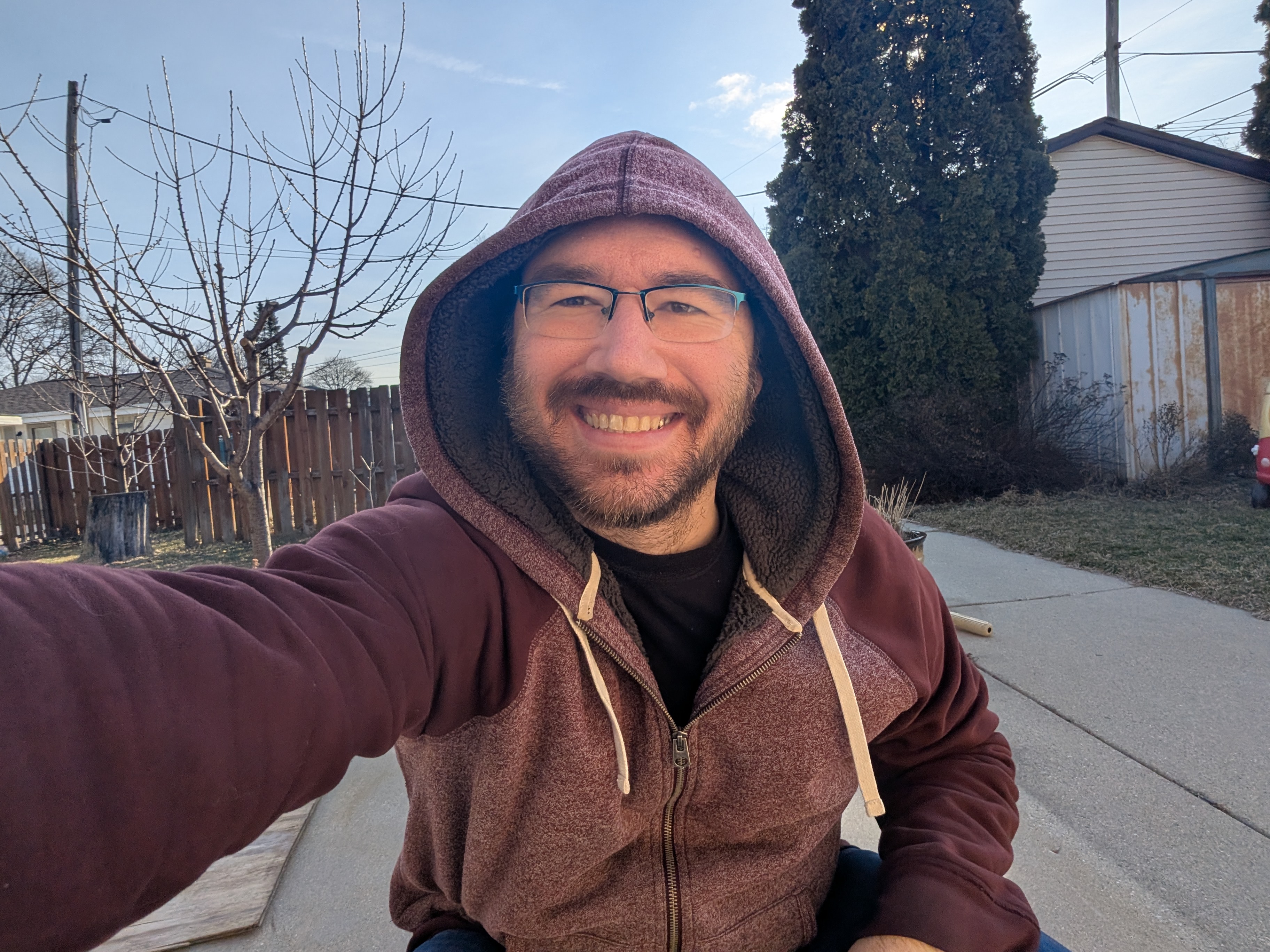
I got into programming at 15 when I was writing scripts for an old chatroom game called Furcadia (I'm not a furry, but that was legit fun). Spent a lot of time playing MUDs in the school libarary, went to University of Wisconsin-Stout for Game Design, and haven't really stopped making games since. I made Lime Blossom Studio to share what I love, and hopefully you'll find something that you love, too!
I also play TTRPGs (Draw Steel right now), paint some miniatures, play Go (old Chinese board game), and practice Taekwondo.
My favorite game development studio growing up was Nippon Ichi Software, and I loved the Disgaea series. With a tactics game as my goal, I started making grid based puzzle games to ease into it. After releasing 3 puzzle games, I've finally started working on a unique tactics game.
I keep coming back to height. Penguins stacking on top of each other in Chill Seekers, climbing and jumping in Doggos in Dungeon, and it's the foundation of my next tactics game. There's so much to be explored in height mechanics!
I wanted to try and reach a larger audience with Chill Seekers without blowing the budget, so I decided to make it without any text. About half of Chill Seekers players are in Japan, so mission accomplished!
I was always annoyed at puzzle games that only had a single solution, and wouldn't let you skip if you got stuck. I design my puzzle games to be open, allowing you to feel creative, and if you get stuck I try to let you keep playing with branching paths.
All three of my Steam games started as jam entries. I figured if I couldn't make the core of the game in a short period, I wouldn't be able to finish it in a reasonable time. The Pareto Principle is in full effect in game development, so we aim to solve 80% of the game during the jam.
The player should always be learning and mastering something new. Everyone learns at different rates, so allowing the game to have variable pacing is key. Allow players who get it to keep going, and allow players who are struggling to keep learning.
I used to do a lot of game jams. Learning is super fast in those environments, you get to be creative, and you get to test out your ideas on other developers.
Once I proved an idea had legs and players were enjoying it, it was time to expand on the idea. You Have No Time, Chill Seekers, and Doggos in Dungeon all started that way.
Finishing it is the hardest part. It takes a ton of time to iterate, and you're never satisfied with where it's at. But you can't keep making games unless you finish the old ones.
Thanks to the following people for helping bring my games to life.